
Wedded to Wax?

I’ve been running waxes pretty much exclusively since the close of March. Now, there’s a lot to be said for the old “horses for courses” mindset. Some folks stick to a dry lube during the summer months, a stodgy wet lube for winter, commuting and a middleweight for general riding.

Testing aside, my personal choices are more nuanced. Some folks shun bike specific lubes altogether, preferring 10W/40 motor oils, or indeed, chainsaw oil. I’ve used both on winter bikes. Provided you deliver VERY sparingly and wipe the chain’s side plates weekly, they can be both cheap and durable. CHEAP AS CHIPS CHAIN LUBES?
There are exceptions, but waxes are generally suited to fair-weather conditions. Traditional blends tended to trap contaminant in the top layer, which flakes away, leaving a protective filmy layer behind. Spring, summer and early autumn is where I find them optimal. I should stress I’m referring to the dropper type, not the immersion formulas, which, as their name suggests, require chains to be removed and immersed in the wax.
The relatively long curing times are offset by low friction, cleanliness, reduced wear and maintenance. Particularly on a derailleur geared build, but I also go the wax route with fixed and single speeds. By definition, these are simple drivetrains, so theoretically wear is more pedestrian.
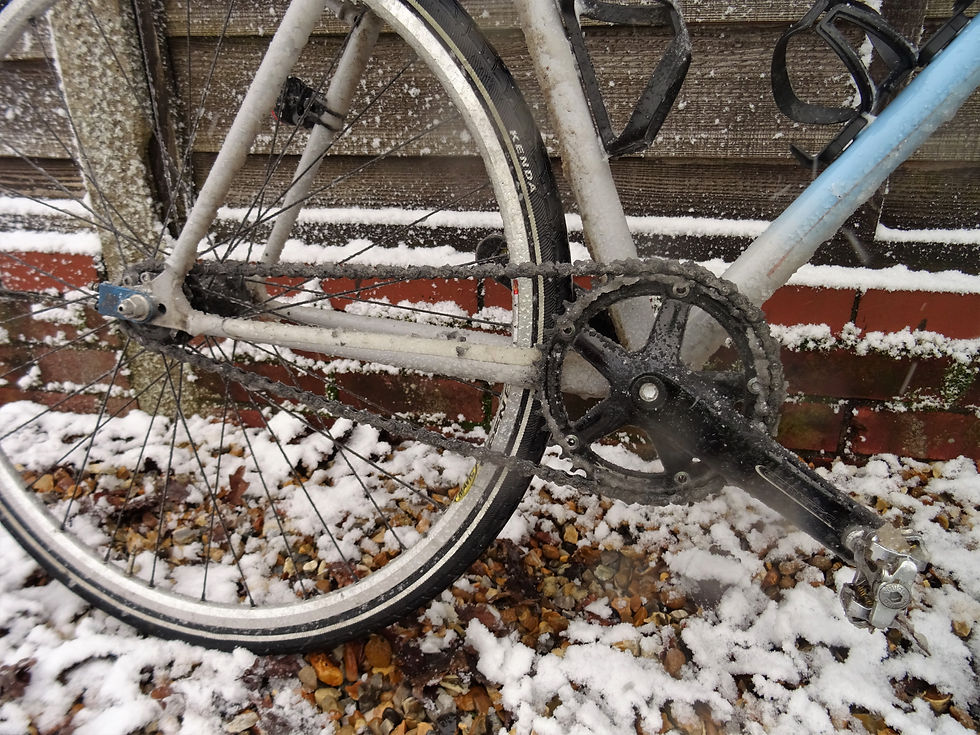
However, wet lubes and wintry conditions can consume aluminium alloy rings at a surprisingly rapid rate. There’s also quite a bit of loading on the drivetrain-especially when holding off against the cranks to regulate speed on a slippery road or powering up a steep climb. I may take the stainless route, when Muffin’s existing ring begins showing signs of wear.

One of the most stoical options-surprisingly so, is the Blub Wax Blub Wax Lube | cycling-not-racing which is better suited to daily drivers, rather than best bikes. Reason being, it will regenerate itself with regular riding. If bike(s) have been sat longer than 48 hours, the lube must be stripped and reapplied.
I’ve exhausted both the Muc-Off Dark Energy Chain Wax Muc-Off Dark Energy Chain Wax | cycling-not-racing and Weldtite Wax Weldtite Wax Lube | cycling-not-racing Extra UK has kindly sent me this All-Mountain-Style Miami Glide Chain Wax, which is timely. I’m curious as to how it compares, especially since this corner of the UK's turned wet again.

Staying with wet, Extra have also sent me Topeak’s Drybag Pannier W/Quicklock 16L It’s a single compartment design made from rugged TPU. Welded seams and roll top closure promise to lock the elements out. One that on paper seems perfect for my kind of general and day riding. Formative impressions suggest I’d go for its 24-litre sibling for weekend touring or commuting. Especially if you’re prone to stopping off at the supermarket en route home.
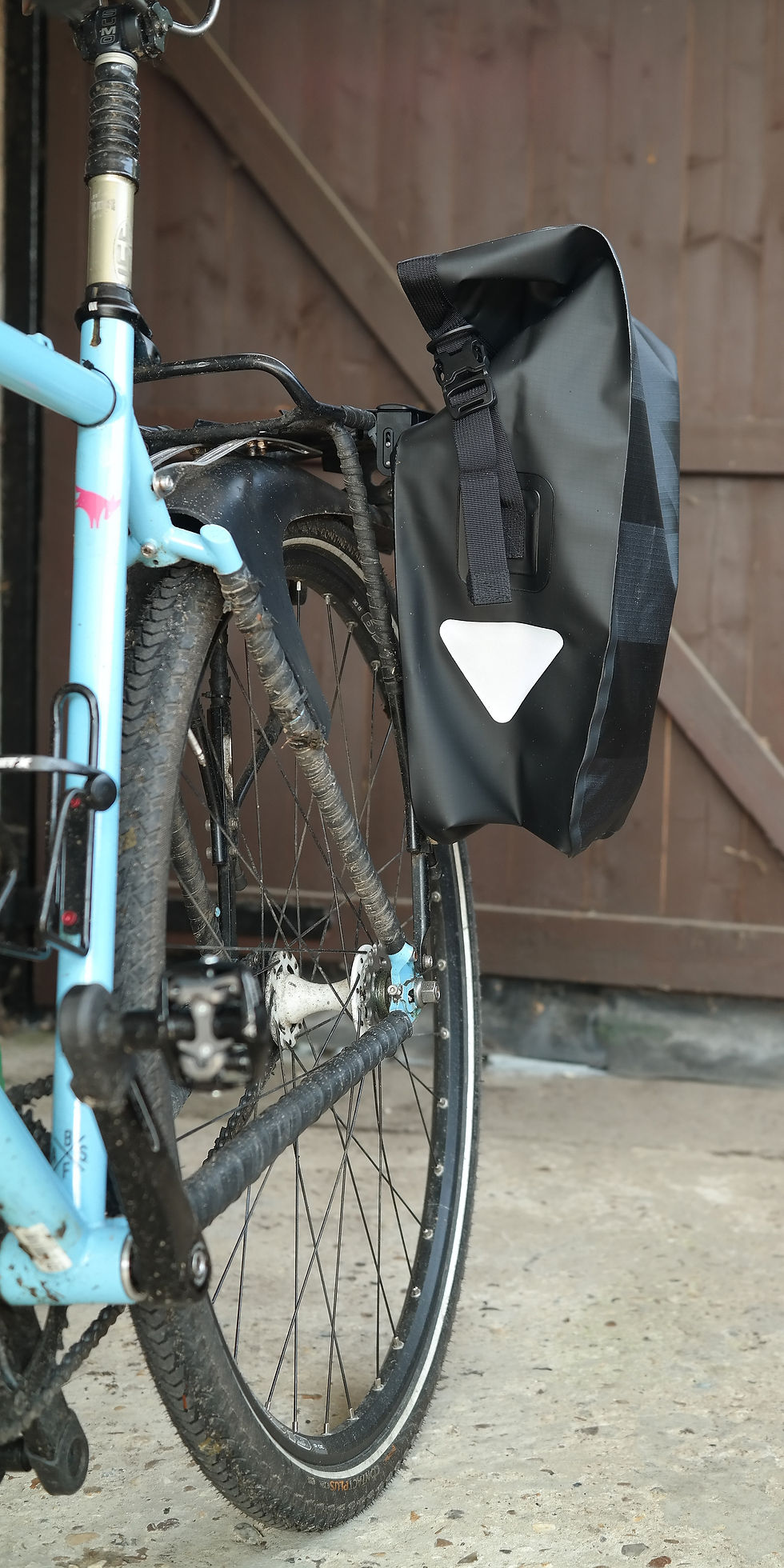
The Quicklock system is basically a spring-loaded mechanism in the handle which makes for very quick, reliable mounting and release. The stabiliser “foot” is similarly user friendly. Tool-free, simply press the button and slide back and forth to suit. It also adjusts with similar ease for right, or left side mounting. Let’s see what the next few hundred mixed terrain miles reveal.
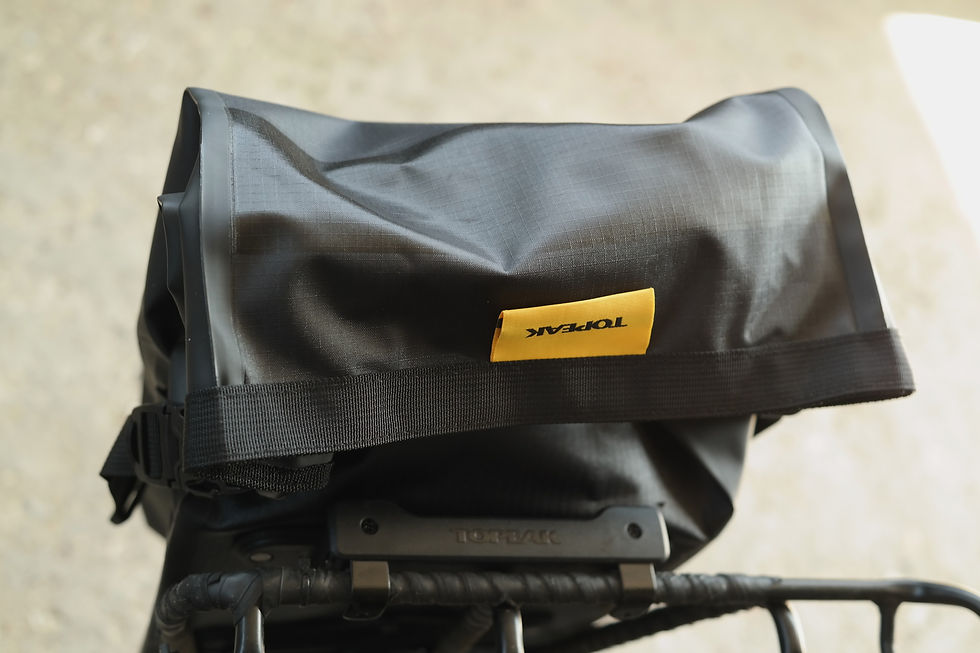
Staying with Topeak, I’ve always being fond of their quick track system, having first being introduced to it back in 2009. My one criticism of anything system-specific is it’s a double-edged sword. On the one hand, they can work incredibly well. Conversely, they also commit you to that particular system, which can be a non-starter for some. For example, while aluminium alloy racks are rugged and dependable for most contexts, I prefer steel for long-haul touring-especially if heading beyond the beaten track. You stand a sporting chance of getting a steel rack repaired by a roadside garage, blacksmith, or anyone reasonably adept with an oxyacetylene torch.

Contexts established, I was pleased to discover Topeak offers a retrofit Quicktrack Adaptor, which Extra UK were also happy to supply. Reckoned compatible with third party racks, I’ll be whipping the sturdy composite aboard Denise’s M-Part Summit M Part Summit Rear Rack | cycling-not-racing Rear Pannier Rack and testing it with the marques’ RX Tunk Bag Topeak RX Trunk Bag DXP and RX Beam Rack | cycling-not-racing and MTX Trunk Dry Bag Topeak MTX Trunk Dry Bag | cycling-not-racing
Lights probably aren’t on many rider’s mind this time of year, but many of us do ride late into and indeed, through the night. I also recommend some form of front and rear lighting on pared to the essential’s summer playthings. A 500lumen compact front light, such as this Raveman LR500 RAVEMEN LR500S FRONT LIGHT | cycling-not-racing and Sigma Nyte Clip The Sigma Nyte Clip Rear Light | cycling-not-racing should cover most bases. Designs such as Infini Sword Infini Sword Super Bright Light Set | cycling-not-racing might be a better fit if you're wanting svelte standbys.

Gaciron sent me their XIAOMAN-1000 Multifunctional All-in-One Professional Outdoor Front light back in April and I’ve been exploring its potential in a wide range of contexts-in and out of the saddle. Apparently, it was named in honour of a stray kitten who followed their designer back to the Gaciron office. Aside from enjoying decent navigational clout on the bike, it also features diffusers for contexts such as camping, where you might want to read, or remain conspicuous.

In common with some other brands, the XIAOMAN also doubles as a power bank for charging computers, GPS, phones and other tech we’ve become very attached to. There are six modes in total, which staircase down sensibly, catering for most contexts. 1000, 600, 300 and 100 lumen steady, 50-100lumen breathe and a 300-lumen daytime flash. I’ll be back very shortly with a mid-term, three-month report.

Michael


Comments