
SEVEN DAY CYCLIST
CYCLING, BUT NOT USUALLY RACING
LATEST UPDATE October4th 2026
HOW DO WE REACH THE OVERALL RATINGS FOR PRODUCTS WE REVIEW?
THIS SITE USES GOOGLE ANALYTICS TO ANALYSE TRAFFIC. CONTINUING TO USE THIS SITE MEANS YOU ACCEPT THE USE OF COOKIES.WE DO NOT COLLECT PERSONAL DATA LEARN MORE OR SEE OUR PRIVACY POLICY
The Zefal Supervision FL1500 Front Light Long Term (5 month) Test 238g £124.99
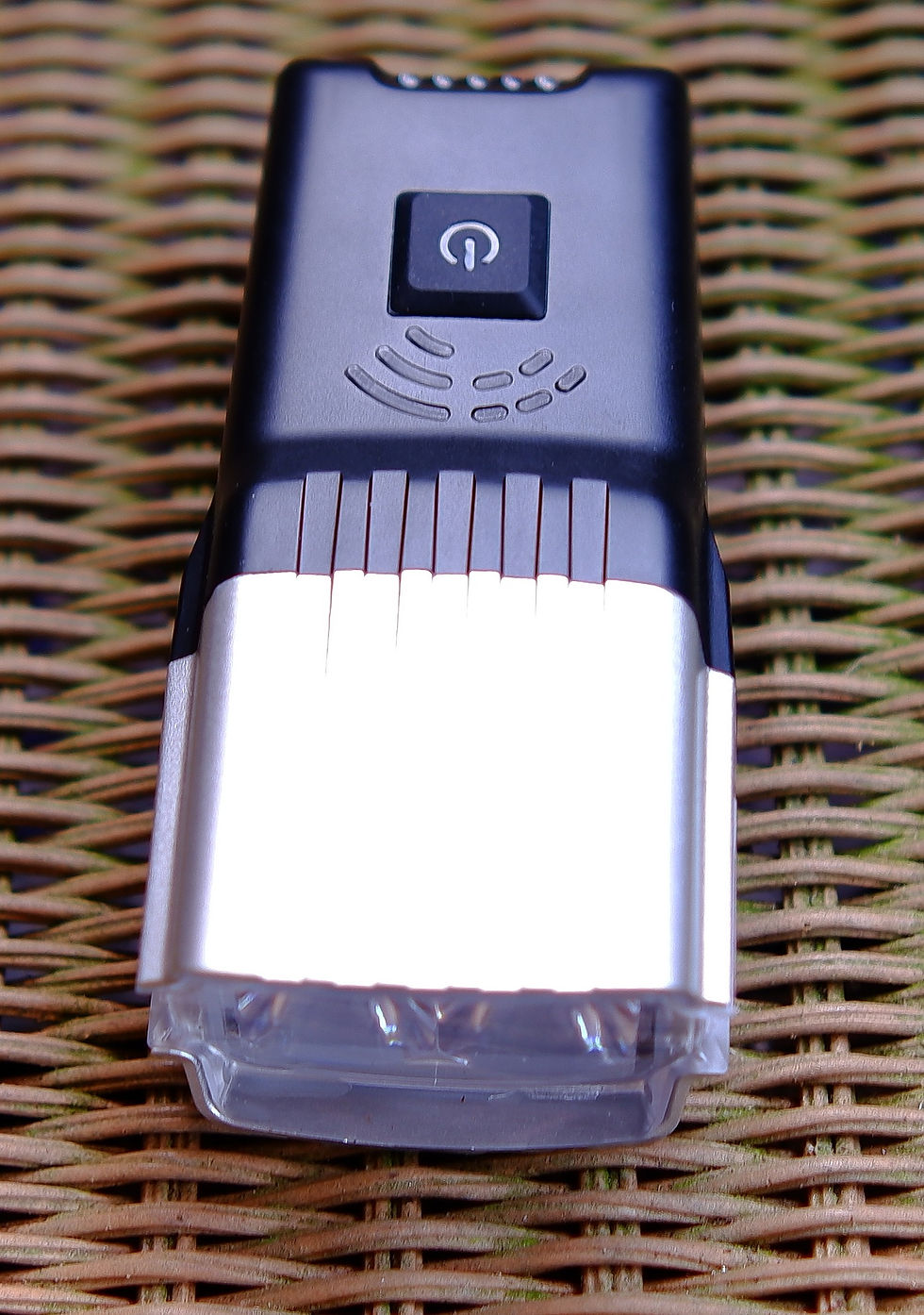

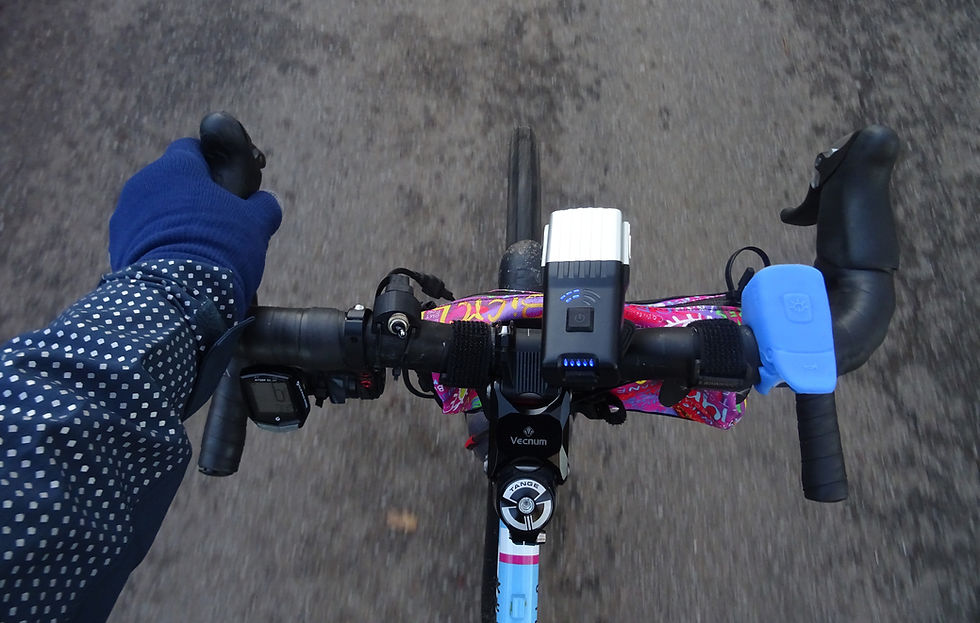


The Zefal Supervision FL1500 Front Light produces a maximum of 1500lumens and has some very nice features, including a sensible range of modes for most conditions, decent peripheral presence, two mounting options and a wireless remote. That said, it is quite bulky and I’d prefer to see a less dramatic drop between modes, especially for longer outings along unlit roads.
Pros: Practical range of modes for most contexts
Wireless remote as standard
User friendly
Decent peripheral output
Clear battery life indicator
Solid Construction
IPX6 for weatherproofing
Cons: Bulky
Relatively hefty
Big jump in modes may not suit everyone
Specification
Much as I’ve come to expect from this end of the market and typical of contemporary high- power lights. The main body comprises of a big chunky and in my view quite fetching slab of machined anodized aluminium alloy that, coupled with the thermal cut out serves to protect the diodes, battery, switchgear and circuits from overheating. Not to mention the everyday accidental knocks and carelessness.
Measuring 10.5x5x3.5cm, its beefy by contemporary standards and consumes quite a bit of bar space. However, on the plus side, this gives it a sporting chance of clearing medium sized bar bags.
The diode is projected through a polycarbonate lens which employs TIR (Total Internal Reflection Technology), which in simple terms promises to maximise output and, in this instance, claimed to throw a 340-degree arc of light.
The power source is a 3.7 V 5000mAh lithium polymer battery. This charges via the increasingly ubiquitous USB C cable, which interestingly isn’t supplied. A quirk, rather than issue for most, since we’re bound to have a tablet, phone or similar employing one.
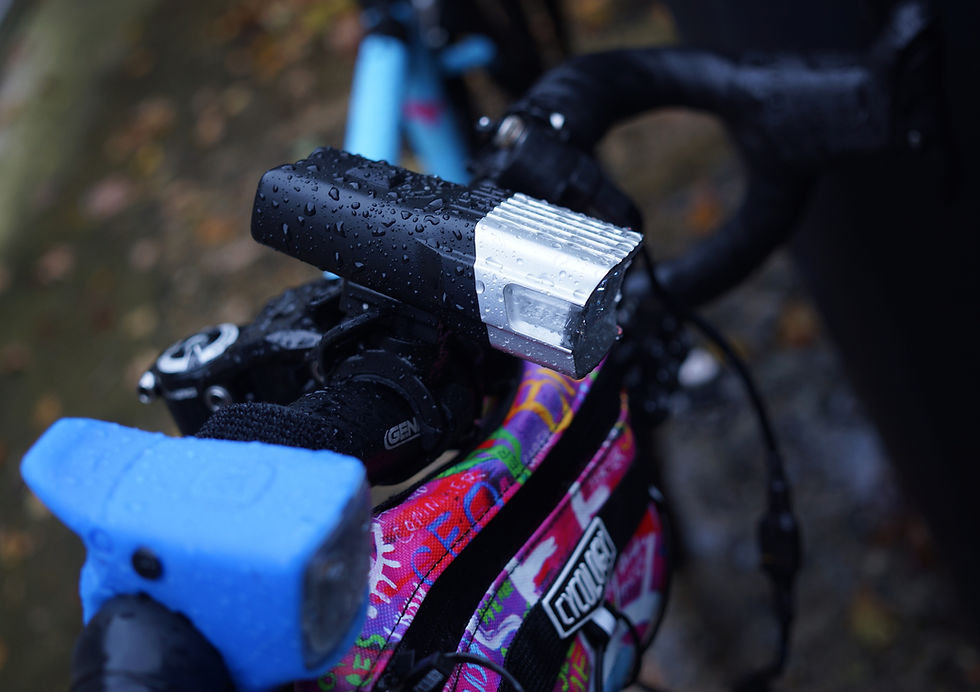
Now, IPX6 for weatherproofing is increasingly standard but again, reassuring and theoretically lending it to quick scoots through singletrack and gravel road. The port cover also fits reassuringly well, although I might give it the odd squirt of silicone spray to keep it nourished and the elements out.
The remote is a wired design, which plugs into the charge port. Bar width will play a part, but I’ve found it hit the sweet spot, just long enough on these D-Riser 16 drops to tether nicely around the hoods without pulling tight, or likely to get snagged when turning the bars.
Modes & Switch 3.5/5
There are five in total, three steady, two flashing. The highest is 1500, tapering down to 800 and 100 lumens, which is a big jump and on paper at least, less nuanced for suburban and town duties. However, there’s some merit to the argument that the latter contexts are more about being seen, rather than navigating. Zefal has opted for 500 and 200lumen flashing. A memory function is again, an expectation but ensures you can just power up and go.
Auto kickdowns are another thing most of us take for granted. In this instance, it drops to 100lumens when reserves dip below 20%, which is welcome, although the 500-lumen flash might’ve been a more obvious choice in the event of getting caught short.
The switch itself is a sensibly sized, top-mounted square and easily found wearing full-finger winterweight gloves. You must press the button for three seconds before it will power up, which came as something of a culture shock but ensures it shouldn’t engage when bouncing around in a pannier, or bar bag.
Once engaged, a single press courses through the modes, a double tap alternates between steady and flashing. The charge indicator is very easy to read at a glance, even in heavy persistent rain, or misty mornings. That said, it won’t do so without the light being engaged, which may be a consideration if you’ve not used it in a couple of days and didn’t pop it on charge after your last ride. The remote, coupled with its more generous surface area makes life simpler still, especially if you’re alternating between dark lanes and suburban streets as I do.
Mount 3.25/5
There are two, mas I said in my introduction. The standard watch strap design works well enough, but it’s worth pre-stretching to ensure you get it vice like around your bars. Failure to do so will see some incremental creep, especially across washboard surfaces and battle-scarred town centre surfaces. Otherwise, I’ve had no issues with those between 25.5 and 31.8. It also employs a ratchet-type assembly so you can fine tune alignment, which came into its own, especially on swoopy riser-type drops. Otherwise, the quick release is smooth and locates with an audible click. Easily removed for charging or performing roadside checks but remember to take it with you if locking up in public spaces.
The Garmin mount is a welcome alternative, although given the light’s relative mass, ensure you keep the fasteners snug, since it can also migrate slightly in the above contexts. This was particularly apparent when I fitted ours to the extended Magicshine Evo 1700 Magicshine Evo 1700 Underneath Light | cycling-not-racing and Gaciron Cetus 1700 Gaciron Cetus 1700 Underneath Bike Light | cycling-not-racing mounts. The ability to purchase spare, or replacement mounts is another welcome touch- even if you just wanted to port between bikes but without having to take the mount over each time.
Output 3.5/5
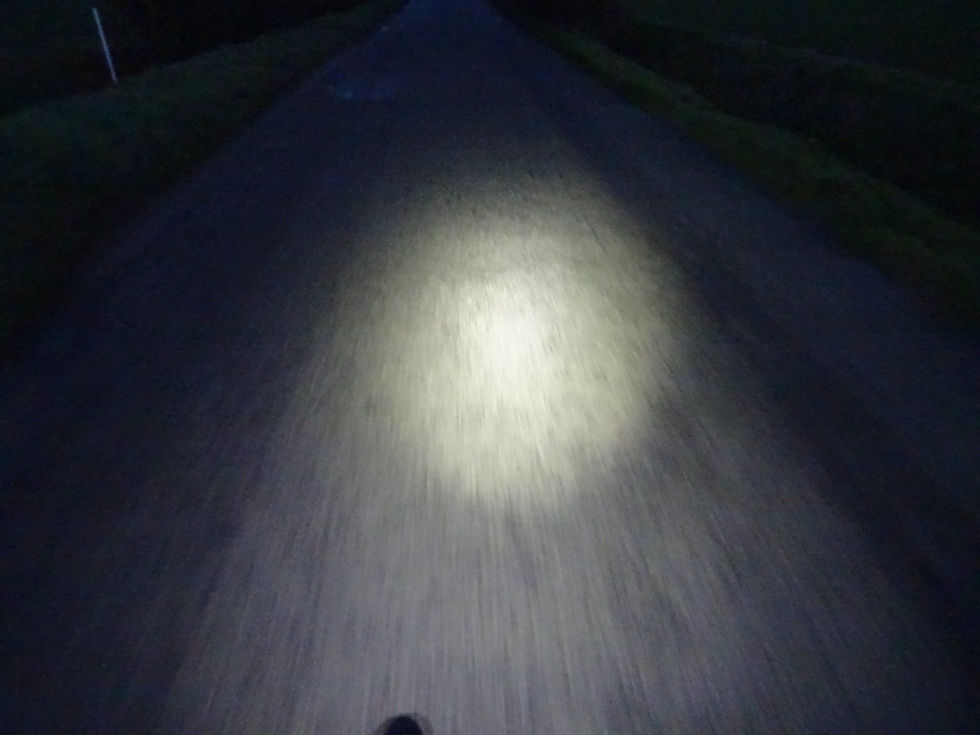
Unleashing the full 1500 produced a decent beam, one with sufficient wallop for disappearing along lonely lanes at 20mph plus. Loosely on par with the Sigma Buster 1600, producing a good spot for picking out the detail, while the flood offers a decent, generic sweep without being too weak at the edges. Provided you’ve angled the light carefully, you shouldn’t dazzle oncoming traffic, but as is good practice, I’ve tended to nudge down to the 800lumens, back up to the full 1500 having passed.
Employing the traditional strap type bar mount, it can also be fitted atop a helmet, say when paired to a high-power bike mounted system on the trails. However, while the beam patterns and output are perfectly adequate, the weight becomes quite noticeable and frankly, I’d be inclined toward something like the Sigma Buster HL 2000 SIGMA SPORT BUSTER HL 2000 | cycling-not-racing if you’re looking at going this route with any regularity.
Back on the bars, oncoming traffic seemed to pick me out at 200 metres-at least that was anecdotal feedback from a friendly trucker, a farmer and on another occasion, my neighbour. Interestingly, it also seemed to deter a family of muntjac from leaping into my path but drew wild rabbits like a tractor beam. Still, keeps my bike handling skills sharp… As I indicated in my opening paragraph, I would’ve preferred a less extreme gap between modes, say tapering down to 1000lumens, rather than the 800.
That said, the 800 still has sufficient navigational punch for navigating pitch black lanes at 15-16mph while still providing adequate notice of holes, mud and similar hazards. Used carefully- say dropping down from the 1500 on a longer, slower climb will conserve power and extend run times a little. No issues with being seen-other vehicles seemed to spot it from 80 odd metres, dropping to 50 or 60 on misty outings. In fact, it’s been my default for pre sunrise and dusk. Aside from being a limp home bail out, the 100lumen steady is very much an option for shared use paths and very well-lit cycle lanes.
Save for testing, I’ve been inclined to skip to the flashing-200lumens for town and suburban stuff if I’m wanting to conserve power, 500lumens when my priority is being seen-especially on a misty morning, or just before dusk. While the 500lumens doesn’t serve so well as a daylight running option in bright, winter sun, the colour and reassuringly quick tempo have cut through cobalt skies and December’s notorious murk. This coupled with the lenses’ peripheral bleed was particularly welcome when negotiating bigger roundabouts or entering the flow of traffic from a concealed driveway, or lane.
Run & Charge Times 3.25/5
I wasn’t surprised to find these were faithful to those cited- with a few caveats. When the mercury’s tanking-say between 2 and minus 2 the Lithium polymer cell seems to drain faster- quicker than a lithium ion of comparable capacity. Something to consider, rather than overly problematic in my experience.
That out the way, I’ve returned within 6 minutes from a full charge, which should satisfy most folks. Charge times are refreshing brisk- 2 hours from the laptop, 1hr 45 from the mains, which is similarly convenient, should you feel a ride coming on, or need to refuel while at work. The Zefal Supervision 1500 will entertain a power bank but will restrict output to 100lumens, so unless you’re in serious doo doo it offers little advantage over the 100-lumen kick down.
Durability/Care 3.75/5
Caveats around keeping the battery fully charged and avoiding full discharges wherever possible aside, the Supervision FL1500 seems rugged. Ours arrived in the last week of November, which was characterised by heavy rain and lanes resembling Paris Roubaix. Ours hasn’t missed a beat in these contexts and I’ve not shied away from leaving it in situ when treating bikes to a sudsy bucket deep clean.
No sign of ingress, or similar issues. IPX6 is reassuring, but I’ve found some charge port connectors vulnerable to moisture (although this tends to be more of an issue with external battery packs), so the odd squirt of MO94 or similar PTFE free maintenance spray is a good precaution. Especially if you’ve ventured along unmade roads and trails. On a wider note, its nice to know that spares are readily available. A second, or replacement mount is £8.99, same price for the wired remote. As a side note, while the stock Garmin mount is adequate, I’d prefer a slightly beefier Garmin mount, given the FL1500’s size and weight.
Value 3/5
£124.99 seems relatively pricey alongside some very competent rivals, some offering higher spec, or at least more lumens. Ravemen K1800 Ravemen K1800 Front Light | cycling-not-racing which produces 1800 lumen weighs 188g, comes complete with wireless remote and some clever sensored technology.
Arguably a closer rival is Sigma Buster 1600 Sigma Buster 1600 & RL150 Light Set | cycling-not-racing is sold singularly (£109.99) produces 1600 lumens and has a less extreme tapering down- 1600, 100, 500 and 150 in the steady modes, which may be a better fit for those tackling primarily rural roads.
However, there’s no remote and though not overly problematic in the real world, it only meets IPX4 for weatherproofing. Moon Regal Max comes in at £89.99 and also produces 1500 lumens, boasts intelligent settings allowing personalisation-to suit riding conditions and environments. It’s also noticeably smaller and lighter and complies with IPX7 for weatherproofing.
Summary
On paper, the Zefal Supervision FL1500 faces fierce competition from cheaper units boasting similar output, refinements and smaller packages. However, and despite some quirks it is a very competent package. One that caters for a very broad range of conditions. Those primarily riding along dark lanes are perhaps better served to those with a 1100, or 1000lumen mode, rather than the Supervision 1500’s 800. However, the lens’s colouring and broad peripheral throw compensate quite well. In a broader context, they come into their own when tackling bigger roundabouts and through built up areas and the 500 and 200 flashing options are very captivating in these contexts and will sip reserves. If you are regularly riding through, town, suburbs and looking to let off some steam along the backroads it could serve very well.
Michael Stenning
Verdict 3.5/5 Competent light with a broad range of modes and nice touches but heavier and pricier than some competitors.


