
SEVEN DAY CYCLIST
CYCLING, BUT NOT USUALLY RACING
LATEST UPDATE September 13th 2026
HOW DO WE REACH THE OVERALL RATINGS FOR PRODUCTS WE REVIEW?
THIS SITE USES GOOGLE ANALYTICS TO ANALYSE TRAFFIC. CONTINUING TO USE THIS SITE MEANS YOU ACCEPT THE USE OF COOKIES.WE DO NOT COLLECT PERSONAL DATA LEARN MORE OR SEE OUR PRIVACY POLICY
Coospo TR70 Radar Taillight
108g £91.22 £72.89
The Coospo TR70 Radar Taillight, at first glance, might be dismissed as a Garmin Varia RTL515 homage - and there are some very obvious nods in the Garmin’s direction. However, don’t click away just yet, the Coospo offers a lot of functionality for very modest outlay. The radar function is more effective, dare I say, more consistent, than some I’ve tried recently - although not without some compromises - and the lighting modes are also practical for most riding contexts.
Pros: Good choice of lighting modes, solid build quality and weather proofing, excellent value for money, generally reliable radar performance, relatively quick charge times.
Cons: Radar can get confused in heavily congested traffic.

Specification

In the box we’ve the Coospo TR70 unit, a Garmin type mount designed to cater for round and aero seat posts, 2 rubber shims, instructions, wrist strap/lanyard (which I successfully mislaid in my excitement) and a USB C charge cable. Measuring 96x39x23mm, the main unit is nicely proportioned and feels reassuringly solid, thanks to the quality of composites (polycarbonate) employed. It also complies with IPX67, meaning it should resist the worst the weather can hurl, all bar prolonged submersion. Indeed, the USB C port charging the 1500Mah lithium-ion cell is nicely protected by a snug fitting deep, sturdy cover.
The Garmin mount has been increasingly standard in recent years, so theoretically allows it to be ported over to other bikes, without needing to swap mounts over, although spare Coospro mounts are available for £7. Flip it over to the business side, the polycarbonate lens projects a 220 degree- arc of light and the radar casts a net of 40 degrees, which bodes well for sharp bends, roundabouts, or just entering the flow of rush hour traffic from a side road.

I’ll get on to modes and outputs in a bit, for the time being, let’s focus on the radar and why you might want it. Now, I’d be the first to say that radar and similar tech is no substitute for periodic checks over the shoulder, nor is it foolproof and that goes across the board.
I’m not directing this criticism at the Coospo. Coospo say the TR70 will detect up to eight approaching vehicles from up to 140metres and to a maximum speed of 125kmh, which theoretically cater for most conditions, including time-trialling on fast A roads. This is communicated to the rider via an app, while the light will communicate your presence by intensifying output. The TR70 also has a “braking” function, which will engage when it senses a progressive, or more abrupt slowing down.
The light doesn’t have to be engaged, rather it can be run as “radar only” meaning it will be off and only trigger when the radar technology senses an approaching vehicle. Aside from conserving battery, an obvious choice for group outings (although there is also a dedicated group ride mode), tandems and indeed towing a trailer, or tag along. As a side note, mounting horizontally doesn’t impair the radar functionality in anyway- some designs, including BBB BLS-251 are intended to be vertically mounted.
In common with other radar units I’ve seen, all this date is communicated via computers supporting ANT+/Bluetooth connectivity, including Garmin, Wahoo, Bryton and, of course, Coospo’s. Smartphone users are also catered for, allowing you to set the lighting mode, while also observe vehicle proximity in real time. This is also communicated audibly on your chosen device and can be switched off, if so desired.
App
As regular readers will know, I’m someone who prefers to ride without being connected to the internet, hence my computers are old school. For those that do, I’m advised it’s compatible with Bluetooth ANT+. That said, with third party devices, some functions, such as battery life indicator, mode control may not work, so worth checking beforehand, to be sure. I downloaded the android version to my phone. This was very straightforward and true to expectation, communication between the TR70 and phone have been seamless and largely unaffected by pylons and other sources of likely interference. This has been the case, regardless of whether I’ve had the TR70 mounted to the bike, or Yak homage trailer. Crucially, the app is user-friendly and intuitive to use. I’d still give it a few dry runs before heading out on the road, but subtle adjustments and communication of approaching traffic and sound are reassuringly accurate. Not that I would want to become overly reliant, or dependant upon any tech. No substitute for regular over the shoulder checks.


Coospo were kind enough to send me their Real Road CS600 GPS Bike Computer. Despite my “Child at Christmas” excitement, it was incredibly straightforward to pair, both with the TR70 and a rival unit. A thin blue line on the screen’s bottom left corner denotes nothing approaching. Two vertical green bars on both sides of the screen and an audible warning denote vehicle(s) in range and until it has passed, while a moving thumbwheel shaped graphic denotes the vehicle’s proximity.
Red bars indicate a fast-approaching vehicle. Fast in this instance means 72kmh, or faster.
Coopspo tell me it will communicate seamlessly with phones and computers up to a distance of 10 metres, which extends its audience to tandems, or bikes towing tagalongs.
Modes & switch 3.5/5
There are seven light modes, offering a maximum of 70 lumens but unlike some lights, these cannot be tailored, or fine-tuned to suit location, or other needs. There are two steady - low (8 lumens) and high (20 lumens) and three flashing- day flash (70 lumens), night flash (20 lumens). Group mode curiously is also a 20-lumen flash, which seems unusually high compared with other lights boasting a similar function. Finally, there’s breathe, which starts at 3 lumens, ascending to 20 lumens. The switch is a small top mounted affair that’s a little soft compared with others.
Not unduly prone to accidental engagement and easily operated wearing middleweight winter gloves, but less positive than some. A sustained 30 second press engages the unit, whereupon it will resume in the last chosen mode. Subsequent, singular prods cycle through the modes-say if you didn’t want to do so via the app. To power down, simply depress it for thirty seconds - very intuitive.
Mount 3.5/5
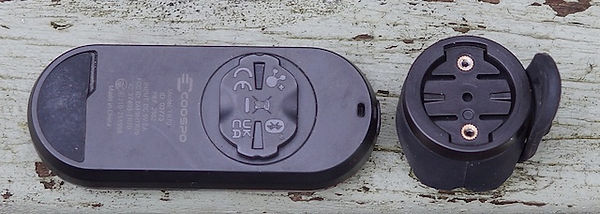
As I mentioned earlier, this is the Garmin type platform that employs a choice of round, or “aero” inserts. Lugs allow the stretchy, watch type strap to tether securely. It's easily whipped off, should you want to port it over, or just prevent opportunist theft. Given I tend to run trunk-type and SQR luggage, I’m pleased to note it can be positioned horizontally and the aero post shim will also entertain pencil thin seat stay and 10mm rack tubing.

However, in the latter context, it could move very slightly, so I shimmed this out using a cut down rubber insert found bouncing around in my bodge box. Otherwise, when it comes to post mounting, no issues with those between 25.4 and 31.8.
Some folks said they’d prefer a saddle rail mount. Noteworthy, and I can appreciate those sentiments, especially on a TT build. However, this is not something that’s been overly problematic for me.
Radar performance 3.75/5
Coospo promises accuracy between 5 and 140 metres and for the most part, this seems very accurate. Radar technology, though not new has been around for a few years and in common with wireless technology, it can give off false readings. The TR70 can give false readings, say if a car is passing in the opposite direction and I’ve found it can get a little overwhelmed on faster A roads when you’ve a series of cars overtaking. Coospo say up to eight vehicles in a row.
I’d say very reliable with six in this context. Along B -roads, where vehicles pass at a slightly slower pace, eight is realistic. It does seem a little confused in congested town centres, where you’ve a mix of parked cars, vans, busses, motorcycles, scooters and cyclists all hustling along. This has induced a fair bit of audio engagement. Not enough to be distracting, and at worst, I’ve found it mildly annoying and frankly, situational awareness in these contexts dictates regular glances over the shoulder. Calling Coospo’s bluff, I mounted ours to my low-slung Yak trailer and communication between TR70 radar and CS600 head unit were unaffected.
Unlike some others, I’ve not experienced pinging when passing a pylon, wire fences and other static steel structures, or on the few occasions when I’ve been riding in a group. On balance and across the board, I’ve found it most helpful in windy conditions, where its often harder to hear approaching traffic.
Again when the radar has engaged, I’ve been quick to glance over to check and where appropriate, adjust position, to allow a safe passing-particularly in the context of HGV and similarly large agricultural vehicles along narrower backroads. Drivers of these bigger vehicles commented on the intensity of the light as they came closer - assertive, not aggressive. I found mist and fog could impact the radar’s perception. In really foggy contexts and along open roads, it dropped as low as 50 metres, but in real terms, that’s still a decent amount of notice.
Output 3.5/5
The light modes, though not unduly potent on paper are surprisingly effective and cater for most environments.
The 20-lumen group mode flash is a little bright, especially at close quarters, so I’d be inclined to employ it when riding at the back. For me and collective harmony, I’d suggest defaulting to the low (8 lumen) steady, which is easy on the eye, while still having sufficient presence to other traffic. Much the same story in well-lit town centres and along shared use paths etc. The 20-lumen counterpart hits another sweet spot since its eye catching but without being offensive.


Informal chat with a couple of riders suggested they could spot the group flash at around 100 metres when attached to the trailer along dark roads in clear to overcast conditions.

The 220-degree arc proved particularly effective at illuminating its presence. At the other extreme, breathes’ wave-like rise and fall proved surprisingly effective around town, especially backed up with the braking and radar elements.
Traffic seemed to take note at 60 metres and hold back, and this included those exiting side roads and junctions. The 20 lumens high steady seemed effective on its own to 50 metres and crucially the radar tech boosted things when it sensed a vehicle approaching. This intelligent design is superior to a light that’s very bright but exhausts the battery quickly.
On some really dark and rainy nights, I’ve gone for the 70-lumen day flash and anecdotally, other riders and a neighbour reckoned they could spot it from 200 metres. Similarly effective in overcast conditions, especially with the braking function and there’s enough punch for brighter sunlight, although models, such as the Sigma RL150 have palpably more impact, like for like. However, as I’ve said earlier, the generally reliable radar system deploys output when we need it most.
Charge & run times 3.75/5
The two hours cite for a full charge cited by Coospo is accurate, using the OEM charge cable, quicker from the mains and using an aftermarket (tablet) cable. Employed in radar only mode. I’ve come close to the 40hours cited, when used in all conditions i.e. quiet lanes, brief sections of fast A roads, suburban and town centres. In common with other sensor-based technology, this is affected by how frequently the braking, or radar “pings” and other factors, such as hills and inclines, since the braking function is in fact a decelerometer, so the stop-start will have an impact.
Talking of which, the TR70’s braking function seems a little more nuanced than others, although engages for three seconds. In common with others, long, slower climbs (especially with a trailer) will see it more active. Otherwise, run times in temperatures between 0 and 14 degrees have held a close affinity with those claimed.
Night and day flash are reckoned good for 30 hours - I’ve gone past 29 with both.. Breathing did its thing for 21 hours 51 (22 hours official). High brightness managed 13hrs 49 (14 hours) and low steady, 22 47 (23 hours).
Care/durability 4/5
Ours has been subjected to the usual mix of wet, wintry rain, muddy spatter and occasionally caked in rural slurry. The odd waterlogged road (calf deep) and of course, sudsy bucket washes. Never missed a beat and there’s been no sign of ingress around the charge port. Mount, shims and other rubberised components seem equally hardy. The generous run times mean there’s likelihood of depleting the battery too often, although in keeping with rechargeable tech generally, frequent charging and not letting the battery drop below 70% habitually should get the very best from it.
Value 4.5/5

£91.22 (now reduced to £72.89) is impressive given the specification and, crucially, performance. BBB Signal Radar comes in at £119. The Signal Radar (or BLS-251) promises a radar capable of detecting up to eight vehicles and from a distance of 190 metres and 35 degrees. There are six modes, including an 80lumen steady mode and the unit also employs an integrated speaker, so it can be run as a standalone device, without the app. However, though not poor (there’s also a kickdown providing a few hours lighting to limp home with) the fourteen hour run time falls a long way short of the Coospo’s 40.
iG Sport SR30 Smart Radar Taillight is £119. It offers six modes, including a 65lumen daylight flash and a 20-lumen night flash and can also be run as radar-only. Garmin Varia is widely regarded as the standard to beat, or at least rival.
However, at £170 it’s considerably dearer than the Coospo. Sigma Reco 81 LINK boasts an StVZO compliant rear light, braking and emergency braking lights. Signa claims it can detect up to 8 vehicles at a time from a distance of 140 metres. Again, at £179.99 it’s also considerably more expensive than the Coospo TR70.
Summary
In common with other radars, there are some false positives from time to time, and it can be “overwhelmed” in very heavy traffic. Being picky, minor improvements to the mount would also be welcomed. Nonetheless, the Coospo TR70 feels solidly made, performance across the board, both as a radar and a rear light is very good and it represents superb value for money.
Verdict: 3.75/5 Minor limitations aside, an excellent radar taillight with impressive performance across the board and very keenly priced.
Michael Stenning
Cycling and Running Fitness Training Products – COOSPO
PUBLISHED MARCH 2026


